Frederic Tudor and the Ice Trade: A Business History Lesson
A one minute business history documentary about Frederic Tudor, who sent a ship of ice to the Caribbean in 1806. It follows the failed first shipment, his work on insulation and icehouses, workers cutting frozen lakes into blocks, and ice reaching India, before mechanical refrigeration erodes his advantage. It is built in the Engraving Collage style, with vintage engravings recombined on deep teal with gold leaf.
History Engraving Collage style
- Voice
- Clive
- Language
- English
- Length
- 1:05
The brief
This is the brief that made the video. Start from it and change what you like.
Make a 65 second landscape (16:9) business history documentary about Frederic Tudor and the ice trade. In 1806 he loaded a ship with ice and sent it to the Caribbean, and the first shipment failed because the ice melted, customers did not know the product and storage was a problem. Show how he kept experimenting with insulation, icehouses and the promotion of cold drinks, while workers cut frozen lakes into blocks and packed them into sailing ships bound for tropical ports. Mention that New England ice eventually reached India and that mechanical refrigeration later removed his advantage. Close on the lesson that creating demand can build a fortune and a new invention can change who collects it. Use a mature, measured documentary narrator with narration only and no background music, and give it a mature historical look with varied scenes.
The script
In 1806, an American businessman loaded a ship with ice and sent it to the Caribbean. His name was Frederic Tudor. He wanted to sell something that melted in the heat—to people who had never needed to buy it.
The first shipment was a commercial disaster. Ice melted, customers were unfamiliar with the product, and storing it was a problem. But Tudor kept experimenting.
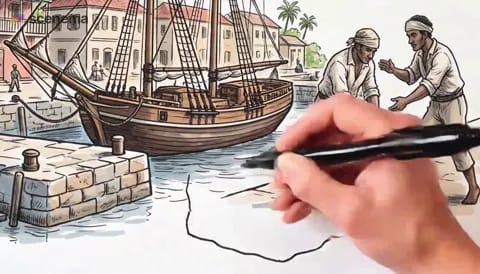
He improved insulation, built icehouses, and promoted cold drinks. Workers cut frozen lakes into blocks, packed them in ships, and carried winter into tropical ports.
Eventually, New England ice reached India.
Tudor’s business depended on more than owning ice. It depended on keeping it frozen until someone would pay for it.
Then mechanical refrigeration began removing that advantage.
The business lesson? Creating demand can build a fortune. A new invention can change who collects it.